


Growing up, growing older : language processing throughout life
Language evolves with age, but it does not follow a linear trajectory.
From the first changes in perceptual abilities, even before babbling begins, to age-related changes, EFL explores the transformations in language processing in perception and production at each stage of life, combining linguistics, psychology, neuroscience, phonology, and clinical phonetics. A deep dive into the cognitive foundations, brain plasticity, and mechanisms of human communication.
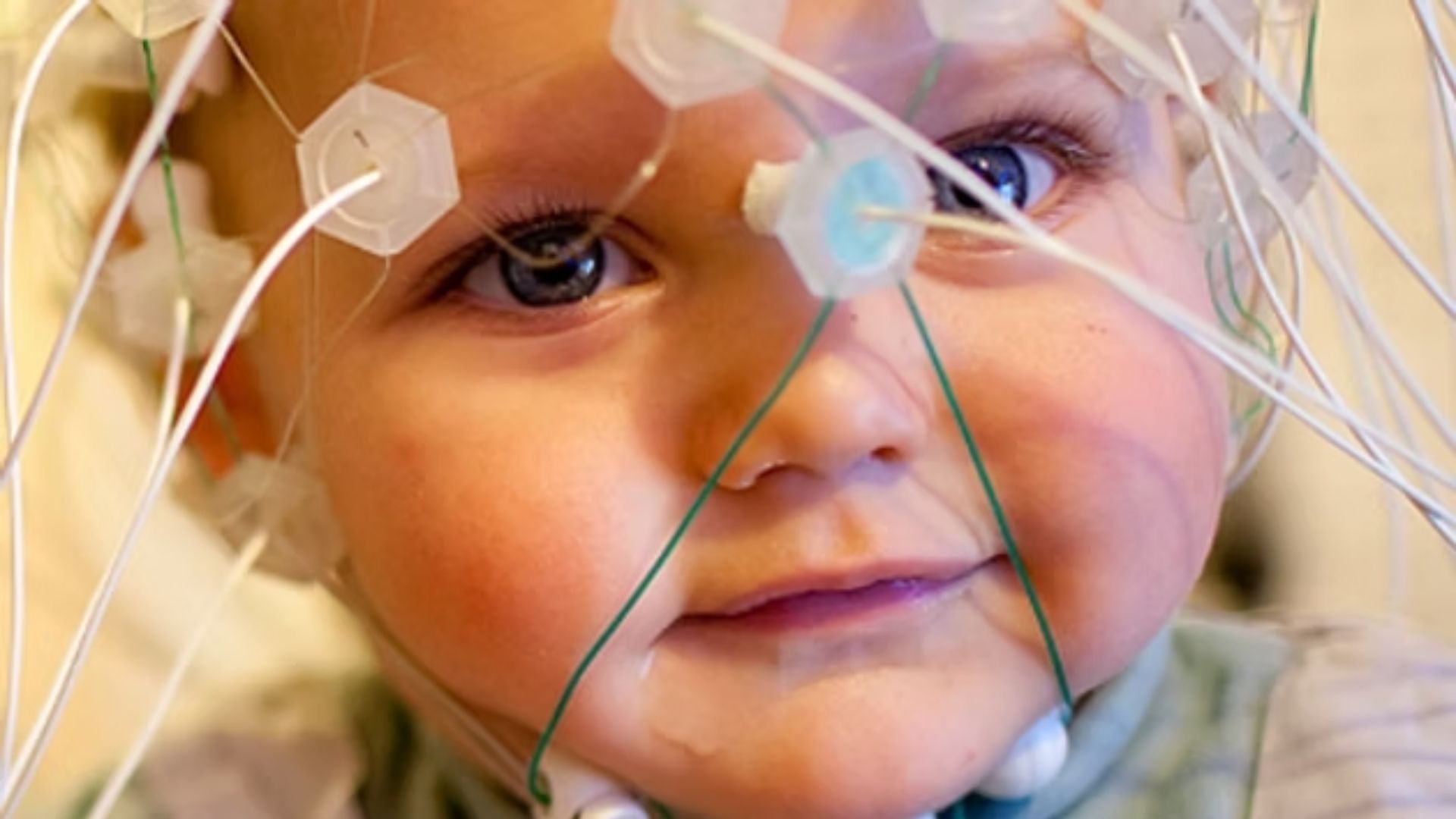
Measure to understand.
The theme involves conducting numerous experiments to understand language at all stages of life.
Co-coordinators :
Thierry Nazzi (INCC – CNRS/Université Paris Cité)
Cécile Fougeron (LPP – CNRS/Sorbonne Nouvelle)
A central axis for understanding language as a living process
Language acquisition begins at a very young age, from birth, or even from the last trimester of pregnancy. Language knowledge and the way it is processed, as well as the motor skills needed to produce language, then transform and adapt throughout life. Early language acquisition is evident in changes in the way language is perceived and in children’s first utterances, which can be observed during the first year of life. These skills consolidate during childhood, evolve in adulthood, and change with aging. These acquisitions and changes affect all levels of language, speech sounds, words, and grammatical structures of the mother tongue or mother tongues in bilingual or multilingual children.
These developments can follow natural, typical trajectories, but also atypical trajectories. While most children acquire language without problems, others experience certain difficulties related to specific developmental disorders or conditions. Similarly, in adulthood, language adapts and evolves naturally with aging, but sometimes physiological or neurological disorders (motor and/or cognitive) can impair its proper functioning.
The objective of this research area is to understand the mechanisms
Scientific questions on the topic
How is language acquired in early childhood, depending on the mother tongue(s)?
- Development of phonological, syntactic, and semantic processing abilities in perception
- Development of spoken language
- Role of early social interactions in language acquisition
- Studies on language acquisition disorders
How does the young child’s brain process language?
- Establishment of language processing systems
- Role of plasticity in early brain function
What clinical factors influence early language acquisition?
- Effect of deafness and cochlear implants
- Impact of prematurity
How does language processing evolve with age in adults and with aging?
- Maturation, evolution, and effects of physiological, hormonal, cognitive, and social changes on our linguistic abilities
- Flexibility and adaptation, compensatory processes implemented by the brain (plasticity)
What are the early signs of cognitive and motor disorders in language?
- Characterization and differentiation of speech and language disorders related to pathology (Alzheimer’s, Parkinson’s disease, stroke, etc.)
- Use of speech and language as a non-invasive biomarker in certain neurological disorders
Methodologies used
The project employs a wide range of integrated methods:
- Behavioral experiments: assessment of perception, comprehension, production, and verbal memory
- Neuroimaging (EEG, NIRS, etc.): observation of brain activity during linguistic tasks
- Acoustic and articulatory phonetics: detailed analysis of speech and quantification of any disorders in speakers of all ages
- Longitudinal corpora: monitoring individuals over several years to observe language development
- Comparative analyses: between ages, between languages, between populations with and without language difficulties
Applications and concrete benefits
- Education: better understanding of language acquisition trajectories in order to adapt teaching methods.
- Medicine and neuropsychology: identification of linguistic markers for early diagnosis.
- Technology: improvement of communication aids (AI, voice interfaces adapted to aging).
- Public health policy: raising awareness of the importance of language as a factor in mental and social well-being.
Partnerships
– Work carried out in collaboration with the INCC (Integrative Neuroscience and Cognition Center), LLF (Laboratory of Formal Linguistics), ALTAE (Theoretical, Applied, and Experimental Linguistic Approaches), and LPP (Laboratory of Phonetics and Phonology).
– Cross-disciplinary approach integrating developmental psycholinguistics, neurolinguistics, and formal linguistics. Phonetics and phonology, clinical phonetics.
– Close collaboration with specialized doctoral and master’s programs (PGSL, Cog-SUP, ED661, ED3C).
Summary
The “Growing Up, Growing Old” strand of the EFL project aims to understand how language is acquired and used from birth and throughout life, in order to better understand its variations and possible dysfunctions—and to design tools, policies, and practices for the future that are more respectful of the diversity of linguistic situations.
Read more

Launch of the Metagrammaticography Seminar: Understanding How We Describe Languages
Yvonne Treis and Aimée Lahaussois, researchers at the HTL laboratory (History of Linguistic Theories), are launching a new seminar devoted to metagrammaticography as part of the EFL project

Languages and urban mobility in Latin America: seminar with Juan Carlos Godenzzi
On February 17, 2026, WP6 “Language in its social context” welcomes Juan Carlos Godenzzi (University of Montreal) for a conference on linguistic dynamics in three South American capitals

New HTL-EFL Seminar: History and Epistemology of Linguistic Paradigms (2025-2027)
The Laboratory for the History of Linguistic Theories (HTL) is launching a new research seminar in collaboration with the inIdEx EFL project. Entitled “Paradigms: History and Epistemology,”
2025 Open Science Prize: Qumin Awarded for Computational Linguistics
The Ministry of Higher Education and Research has awarded its 2025 Open Source Research Software Prize to Qumin, developed by Sacha Beniamine (former EFL PhD student, supervised by Olivier Bonami) and Jules Bouton (current EFL PhD student, also supervised by Olivier...