

From 17 November to 9 December 2026, Charles Chang (City University of Hong Kong) gives four seminars on pronunciation in multilingual speakers.
What does it mean to be a “native speaker” when most people use more than one language? As part of the EFL International Chairs, Charles Chang, Professor of Linguistics at City University of Hong Kong, is visiting the Laboratoire de Linguistique Formelle (LLF) from 15 November to 12 December 2026. His seminar series, Phonetic Variation and Change in Multilingual Contexts, looks at how pronunciation varies and changes in people who speak several languages.
The speaker: Charles Chang
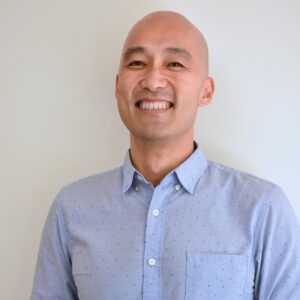
Photo: City University of Hong Kong
Professor of Linguistics in the Department of Linguistics and Translation at City University of Hong Kong, Charles Chang trained at Harvard, Cambridge and Berkeley. His research focuses on the phonetics and phonology of language learning, multilingualism and language attrition, in novice learners, heritage speakers and long-term expatriates. He is hosted at the LLF by Ioana Chitoran.
👉 His page at City University of Hong Kong
What the series explores
Phonetics studies the sounds of speech: how we produce them and how we perceive them. The series applies it to multilingual speakers in three settings: heritage speakers, people learning a second or third language, and the first language itself, which can shift through contact with another language over the lifespan.
Programme of the four seminars
- Seminar 1 — Tuesday 17 November: what multilingualism means for the “native speaker” construct. Charles Chang argues for a more practical notion, the community-defined “representative speaker”, who may or may not be multilingual.
- Seminar 2 — Wednesday 25 November: speech production and perception in heritage speakers, who learn a language at home before the majority language of their society becomes dominant. How does their pronunciation resemble, and differ from, that of speakers in the homeland?
- Seminar 3 — Tuesday 1 December: crosslinguistic influence when learning an additional language. How do multilinguals keep apart, or merge, similar sounds across their languages?
- Seminar 4 — Wednesday 9 December: how a new language affects the ones acquired earlier, from short-term “phonetic drift” to long-term “phonetic attrition”, and the open questions in this area.
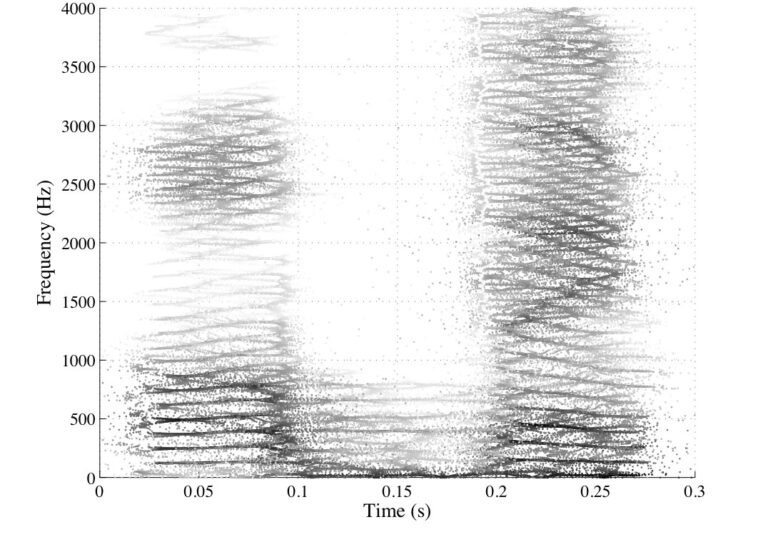
Speech spectrogram. Kelly Fitz, CC BY-SA 3.0, via Wikimedia Commons
Practical information

- Time: 2–4 pm, room OdG 533.
- Venue: Université Paris Cité, Laboratoire de Linguistique Formelle, Olympe de Gouges building, 8 place Paul Ricœur, 75013 Paris.
- Access: someone will welcome you at the building entrance. If you miss them, ask for an access badge at the front desk (ID required).
- Online: the seminars can be followed on Zoom; links will be shared before each session.
- Recordings: the seminars will be recorded and published on the EFL website.
- Language: English.
The series is open to the EFL community. It connects with two of the project’s research themes: bilingualism, multilingualism and contact languages and language variation and change.
👉 Meet the other visiting professors: four International Chairs for the 2026-2027 EFL year