


La diversité linguistique comme terrain d’essai pour les théories du langage
Chaque langue est une variation sur le thème universel de la communication humaine.
EFL explore cette diversité comme un laboratoire vivant pour tester, affiner et dépasser les grandes théories linguistiques. Loin de réduire les langues à des exceptions ou des anomalies, ce programme considère la diversité comme une condition de scientificité.

Etudier de la diversité pour mieux comprendre le langage
© Photo de Alexander Grey @Pexels
Nos projets de recherche
Cross-linguistic Patterns of Phonological Distinctions and Phonetic Diversity
Coordinators: Rachid Ridouane (LPP), Shigeko Shinohara (LPP),
Cross-linguistic Patterns of Phonological Distinctions and Phonetic Diversity
Coordinators: Rachid Ridouane (LPP), Shigeko Shinohara (LPP),
Other permanent EFL members: Jalal Al-Tamimi (LLF), Angélique Amelot (LPP), Jiayin Gao (LPP), Anne Hermes (LPP), Bowei Shao(LPP), Giuseppina Turco (LLF), Hiyon Yoo (LLF), Ioana Chitoran (LLF)
Emeriti : Didier Demolin, Pierre Hallé
Doctoral students : Chenyu Li (LLF), Yunzhuo Xiang (LPP), Hồng Quang CHÂU (LLF), Erik Morris (LLF), Caihong Weng (LLF), Zifeng Liu (LLF)
Master’s students: Qianwenjun Qiao, Saidi Sana
Postdocs : Philipp Buech (LPP)
External collaborators: Ekaterina Shepel (Saarland)
This research project examines how phonological contrasts are shaped across languages, asking whether universal principles govern the ways in which sound systems organise distinctions. We focus on the strong cross-linguistic tendency toward binary contrasts, such as consonant length and aspiration, and investigate how production and perception constraints influence their realisation. The project also explores the conditions under which rare sounds—such as voiceless nasals and other typologically unusual consonants found in Japonic varieties—emerge, persist, or disappear.
Drawing on production and perception experiments, controlled manipulations of speech rate and clarity, and field data from under-documented dialects, we combine experimental phonetics with formal phonological analysis and statistical modelling. This integrated approach allows us to compare phonological systems across diverse languages and to identify broader typological patterns.
Ultimately, this work package aims to clarify the forces that constrain phonetic and phonological diversity, illuminating both the universal tendencies and the limits that shape sound systems across human languages.
Long distance dependencies in a crosslinguistic and crossmodal perspective
Coordinator: Caterina Donati (LLF)
Other permanent members: Anne Abeillé (LLF), Evangelia Adamou (LACITO), Berthold Crysmann (LLF), Karen De Clercq (LLF), Barbara Hemforth (LLF), Chris Reintges (LLF), PolletSamvelian (Lattice)
Doctoral students: Li Ruoxuan (LLF), Zhu Yimin (LLF), Lion Oks (LLF), Jessica Lettieri
This project explores the complexity associated with long distance dependencies across languages and modalities investigating a number of constructions involving both overt and covert dependencies, such as relative clauses, ex situ and in situ questions, exclamatives, topicalizations, focalizations, imperatives, etc. For each of these phenomena, the project aims at testing and modeling the limits and extent of their cross crosslinguistic variation focusing in particular on the their locality and cartography. It also aims at exploring their learnability (both in monolingual and in bilingual situations) and consequent usability as diagnostics for SLDs, their processing (comparing in particular “gaps” and resumptive pronouns), and their trends of evolution in diachrony, modeling the diachronic development of various types of subordinate clauses involving dependencies.
The methodologies employed are mixed, from theoretical modeling, to corpus investigation, to offline and online experimental methods, such as acceptability rating , semantic categorization, picture matching, maze , self-paced reading , eye tracked reading, eye tracked visual world preference paradigm, etc.
Foundations of phonetics: history and epistemology
Coordinators: Christelle Dodane (CLESTHIA), Claire Pillot-Loiseau (LPP), Pierre-Yves Testenoire (HTL)
Other permanent members: Jalal Al-Tamimi (LLF), Angelique Amelot (LPP), Maria Candea (CLESTHIA), Katia Chirkova (CRLAO), Emmanuel Ferragne (ALTAE), Cécile Fougeron (LPP), Jiayin Gao (LLP), Muriel Jorge (HTL), Chloé Laplantine (HTL), Franck Zumstein (CRLAO), Otto Zwartjes (HTL)
Emeriti:Didier Demolin (LPP), Jean-Marie Fournier (HTL), Annie Rialland (LPP); Jacqueline Vaissière (LPP)
External collaborators: Remy Guerinel (ICP), Claudia Schweitzer (HTL, USN)
This project examines the disciplinary roots of phonetics, focusing in particular on the beginnings of experimental phonetics and the linguistic ideas that led to those beginnings; typology and dialectology as backgrounds for experimental phonetics; and description of sound units and sound inventories from historical and epistemological perspectives. In particular, we plan, on the basis of an in-depth study of archival materials, to establish a mapping of the phonetics laboratories that emerged in France and abroad under the influence of Abbé Rousselot’s work, the founder of experimental phonetics. We intend, in particular, to identify these laboratories, analyze the conditions of their creation, their personnel, their instruments, and their scientific output, and to document the circulation of knowledge and techniques that accompanied their development. To achieve this, we plan to establish a collaboration with the Institut Catholique de Paris, with a view to facilitating researchers’ access to the archives held by both institutions, to conducting the inventory, digitization, and shared management of these archival materials, and to considering the joint to the organization of events, publications, dissemination activities and shared valorization initiatives. We plan to extend this collaboration to the University of Rennes, which holds archival materials relating to the one of the first phonetics laboratory established in France, the laboratory of experimental psychology and linguistics (1895).
Grammar, meaning and their interface
Coordinators: Karen De Clercq (LLF), Lucia Tovena (LLF)
Other permanent members: Marc Allassonnière-Tang (EA), Lisa Brunetti (LLF), Patrick Caudal (LLF), Agnès Celle (ALTAE), Jiyoung CHOI (CRLAO), Berthold Crysmann (LLF), Anne Daladier (LACITO), Huy-Linh DAO (CRLAO), Christopher Gledhill (ALTAE), Rozenn Guérois (LLACAN), Barbara Hemforth (LLF), Anne JUGNET (ALTAE), Sylvain Loiseau (LACITO), Amina Mettouchi (LLACAN), Mojca Pecman (ALTAE), Laure Sarda (LATTICE), Camille Simon (LACITO), Xinue Yu (CRLAO), Lichao Zhu (ALTAE)
Emetiti: Carmen Dobrovie-Sorin (LLF)
PhD students: Valeria Gradimondo (LLF), Aleksandr Sergienko (LLF),
Master’s students: Taherkhani Nima, Anaïs Robin, Aliakbar Nariman, Saka Ilkim,
Within GraMI (Grammar, Meaning and their Interface), we investigate the relationship between linguistic form and meaning, as well as how—and to what extent—grammar constrains that relationship. The operation focuses on cases in which form and meaning diverge: a single form may yield multiple interpretations; a single interpretation may be expressed by different forms; meaning may arise without overt form; and a form may occur without a clearly identifiable semantic contribution. Through cross-linguistic comparison, GraMI aims to determine whether such phenomena fall within grammar in the strict sense or require analysis at the interface between semantics and pragmatics.
Nonverbal predicates in grammar and discourse: Exploring noncanonical clause patterns in spoken corpora
Coordinator: Katharina Haude (Sedyl)
Other permanent members: Marc Allassonnière-Tang (EA), Katia Chirkova (CRLAO), Huy-Linh Dao (CRLAO), Margherita Farina (HTL), Rozenn Guérois (Llacan), Guillaume Jacques (CRLAO), Stefano Manfredi (Sedyl), Amina Mettouchi (Llacan), Tatiana Nikitina (Lacito), Nicolas Quint (Llacan), Sonja Riesberg (Lacito), Lameen Souag (Lacito), Yvonne Treis (Llacan)
Emeriti: Isabelle Bril (Lacito), Claudine Chamoreau (Sedyl), Anne Daladier (Lacito), Paulette Roulon (Llacan)
External collaborators: Albert Alvarez González (Sonora), Agnes Korn (CERMI)
All languages have “noncanonical” clausal constructions, including constructions in which the predicate is not a lexical verb. The formal and functional types of nonverbal predicates vary greatly within and across languages. For example, in many languages nonverbal predicates are formed with a verblike auxiliary such as a copula, while others have constructions that do not require or allow a copula, so that a nonverbal lexical element (e.g. a noun, an adjective, an adverbial element, or a pronoun) alone can function as a predicate.
The research proposed here investigates the forms, functions, and uses of nonverbal predicates in typologically diverse languages. Based on the most up-do-date typological research in the domain, the nonverbal predicate structures in the grammars of different languages will be inventorized. Questions to be answered include the following;
- What formal types of nonverbal predicates are there in the language?
- Which nonverbal lexical elements can be predicates?
- How are the different nonverbal constructions formed (e.g. simple or complex)?
- How is the strategy to form nonverbal predicates related to the parts-of-speech distinction in a given language, and what is the role of deverbal derivations (in particular nominalization)?
- Can we show in our languages of study that a copula function is assumed by elements such as focus markers or pronouns?
Beyond the analysis of grammatical constructions, the project will investigate the use of nonverbal predicates in spontaneous (preferably oral) discourse. Corpus data will be annotated for the purpose of exploring the following points, which will be further refined as the research proceeds:
- How common are different types of nonverbal predicates – specificational (“my father is a teacher”), identificational (“my father is the director”; “this is my father”), existential constructions (“there was a man”) etc. – in the different corpora?
- What kind of discourse genres (e.g. dialogues, procedural texts, descriptions, narratives) favours nonverbal predication?
- Where in a given text are nonverbal predicates used (e.g. at the beginning or end of a text or text passage)?
- To what degree are nonverbal predicates employed to manipulate information structure in a given language (e.g. through clefting)?
- Is a preference for nonverbal constructions related to other grammatical properties of a language, including intonation patterns?
By focusing on corpus data of typologically diverse languages, the project will contribute important insights to the current state of the art of research on nonverbal predication, whose discourse use still requires more systematic investigation.
Multimodal Grammar and Pragmatic Inference
Coordinators: Jonathan Ginzburg (LLF), Ira Noveck (LLF)
Other permanent members: Amina Mettouchi (Llacan), Barbara Hemforth (LLF), Ghanshyam Sharma (Plidam), Patrick Caudal (LLF), Jiyoung Choi (CRLAO), Huy Linh Dao (CRLAO)
Doctoral students: Diana Bakina (LLF), Shiyun Dong (LLF), Emma Krane Mathisen (LLF)
This project uses experimental methods to explore the way speakers imbue utterances with meaning through utterances and text as well as beyond what is conveyed by linguistic conventions. Under a broad understanding of these conventions this would include traditional linguistic areas such as figurative language, quantifiers and discourse connectives and extend to gestures, laughter, and smiling. Work undertaken in this operation includes: experimentally testing semantic and pragmatic theories as well as how multimodal content arises in combination from several channels (speech, laughter, winking, shrugs, head movements etc); comparing inner speech and external dialogue; corpus-based study of crying and laughter among infants in interaction with caregivers and their modelling; the meaning of emojis and their triggering of irony; experimental fieldwork on phenomena related to directional morphological systems and spatial intonations in Iwaidja (an Australian language of Arnhem Land), which are highly sensitive to the co-representation of space in context, and where pragmatics plays an essential role; hand gestures with an open palm and their prosodic correlates.
The grammatical encoding of expressivity and emotions
Coordinators: Lisa Brunetti (LLF), Agnès Celle (ALTAE)
Other permanent members: Marc Allassonnière-Tang (EA), Lena Borise (LLF), Lisa Brunetti (LLF), Patrick Caudal (LLF), Huy-Linh Dao (CRLAO), Aude Grezka (LIPN), Anne Jugnet (ALTAE), Aimée Lahaussois (HTL), Manon Lelandais (ALTAE), Samia Naïm (LACITO), Mojca Pecman (ALTAE), Hiyon Yoo (LLF),
Emeriti: Stéphane Robert (LLACAN)
Doctoral students: Kaijun Sheng (HTL), Michele Cardo (ALTAE), Natacha Marjanovic (Corpus)
Description:
This project explores the ways in which expressivity is encoded in the grammar of various languages. It takes linguistic diversity as a testing ground to uncover regular patterns in the emergence of expressivity. It investigates the expression of emotions at all linguistic and paralinguistic levels – lexicon, syntactic constructions, speech acts, intonation and gestures. Research is based on oral, written, multimodal data, using both various corpora and experimental methods. Specific attention is paid to how expressivity is produced and perceived, and how computer-mediated communication may give rise to emergent expressive constructions, and contribute to shaping online communities. The project also studies how expressive expressions emerge and evolve over time, testing Meillet’s spiral model of grammaticalisation.
Metagram: Developing (meta)grammaticographical methods
Coordinators: Aimée Lahaussois (HTL), Yvonne Treis (LLACAN)
Permanent members: Katia Chirkova (CRLAO), Aude Grezka (LIPN), Rozenn Guérois (LLACAN), Dmitry Idiatov (LLACAN), Sylvain Loiseau (LACITO), Ronny Meyer (LLACAN), Alexis Michaud (LACITO), Nicolas Quint (LLACAN), Sonja Riesberg (LACITO), Mark Van de Velde (LLACAN), Valentin Vydrin (LLACAN), Vincent Paillusson (HTL),Chloé Laplantine (HTL), Sebastian Fedden (LACITO),
Emeriti: Francine Maziere (HTL), Vincent Nyckees (HTL)
Doctoral students: Fábio Barcellos Granja (LLACAN), Guendalina Gianfranchi (LLACAN), Kaijun Sheng (HTL )
External collaborators: Agnes Korn (CERMI)
The research project “Developing (meta)grammaticographical methods” centers around the analysis of features of descriptive grammars and the development of new insights into grammar-writing practices. It will explore questions of metagrammaticography, and thus be of interest to both linguists engaged in language description and typologists who make use of descriptive grammars.
This project focuses on two main activities:
- A monthly seminar on grammar-writing practices, with 8 sessions a year (second Tuesday of each month, Feb-May and Sept-Dec), in hybrid mode.
Linguists who have written significant reference grammars will be invited to discuss their grammaticographical practices and experiences. They will be provided with a list of topics to address, covering questions such as structuring schemes, influences, use of exemplification, integration of the corpus into the grammar. The seminar will focus on one language family for several sessions in a row, in order to highlight differences in practices for a linguistic area.
- The development of a database of TOCs of descriptive grammars
The project will actively build up an existing database (which features 250 grammars) of searchable, hierarchized tables of contents of descriptive grammars, both historical and contemporary, while also refining the infrastructure and search functions for the portal. The database makes it possible to compare tables of contents of existing grammars, with the possibility of creating sub-corpora according to a variety of criteria and applying a number of search and sort filters in order to identify patterns and trends in grammar writing. Through the portal, it is possible to track terminological changes and to trace first occurrences of various linguistic terms. Each speaker at the seminar will contribute their grammar to the database.
The word in phonology, morphology, and syntax: convergence and divergence
Coordinators: Berthold Crysmann (LLF)
Permanent members: Marc Allassonnière-Tang (EA), Olivier Bonami (LLF), Lena Borise (LLF), Patrick Caudal (LLF), Ioana Chitoran (LLF), Jiyoung Choi (CRLAO), Karen De Clercq (LLF), Dmitry Idiatov (LLACAN), Aimée Lahaussois (HTL), Tanya Nikitina (LACITO), Nicolas Quint (LLACAN), Sylviane Schwer (LIPN), Guillaume Wisniewski (LLF), Hiyon Yoo (LLF), Xinue Yu (CRLAO), Lichao Zhu (ALTAE), Maria Zimina-Poirot (ALTAE), Zumstein Franck (ALTAE)
Emeriti: Carmen Dobrovie Sorin (LLF), Isabelle Bril (LACITO)
Doctoral students: Jules Bouton (LLF), Lukáš Kyjánek (LLF), Viktoriia Vershniak (LLF)
This project aims at addressing recurring challenges to the relevance of the notion of a word as a theoretically and empirically well-defined category. Building on recent progress in theoretical linguistics, computational modelling, and typology, it will propose new replicable heuristics for the identification and study of words.
The word constitutes a central unit across several components of grammar. In standard conceptions of syntax, it is the most basic unit from which more complex entities can be constructed. While words often correspond to predicates in sentence semantics, deviations are common, e.g. with complex predicates or incorporation. Lexicalist approaches to grammar emphasise that a word’s rich constraints on its syntactic environment accounts for much of syntactic variation. Dependency Grammar understands syntax exclusively in terms of word-to-word relations. Some versions of generative grammar, by contrast, extend the domain of syntax below the word-level, and thus consider words a epiphenomenal.
Languages also differ with respect to morphological complexity: semantic relations, such as causation are expressed as part of the verb in some languages (e.g. Japanese, Bantu languages), while there are separate words in Germanic or Romance. In polysynthetic languages, the verb encodes many distinctions, including participants.
Most theories of inflectional morphology agree that the word is the locus where morphosyntactic properties are realised. While morphological realisation is often manifest on the word itself, periphrastic realisation, as found in composed tenses in French, delegates part of morphological realisation to another word.
In phonology, the word defines an important domain, most notably form assigment of lexical stress (or tone). Furthermore, since some phonological processes only apply within words, but not across word boundaries, phonology can serve as a diagnostic for wordhood.
Clitics constitute the prototypical example of elements that challenge the notion of wordhood in phonology, morphology and syntax. While not independent words themselves, they are phonologically dependent on a host. While they may integrate with their host, integration may differ from morphologically bound elements, such as affixes. To what extent do the notions of phonological and syntactic words coincide, and how do clitics and other function word help us to understand the differences. Some clitic systems show overlap between syntax and morphology: pronominal clitics in Romance typically realise syntactic arguments of their host, which is not too different from pronominal affixation in polysynthetic languages.
In this project, we aim to investigate notions of wordhood and how they converge or diverge between different grammatical components and between different languages. It is our firm belief that foundational issues such as the notion of word can only be answered in light of linguistic diversity.
Paradigms: history and methodology
Coordinators: Lionel Dumarty (HTL), Margherita Farina (HTL)
Permanent members: Olivier Bonami (LLF), Franck Cinato (HTL), Alejandro Villalba Diáz (HTL), Anne Grondeux (HTL), Muriel Jorge (HTL), Aimée Lahaussois (HTL), Chloé Laplantine (HTL), Nicolas Quint (LLACAN), Pierre-Yves Testenoire (HTL), Franck Zumstein (ALTAE), Otto Zwartjes (HTL)
Emeriti: Bernard Colombat (HTL)
Doctoral students: Chiara Biaggini (HTL), Bianca Darcey (HTL)
This project aims at examining the emergence and development of paradigms in the description of languages across different theoretical frameworks. Ultimately, it seeks to interrogate the very notion of paradigm by investigating its defining features, the ways in which it was constituted, and how it has gradually evolved through contact with new descriptive and epistemological approaches.
Several questions will guide this inquiry. Particular attention will be paid to the status of morphology and to conceptions of word analysis prior to the emergence of the notion of the morpheme: how did earlier grammatical traditions describe the internal structure of the word, and what analytical tools did they use to categorize forms? The project will also explore the influence that the very existence of paradigms has exerted – and continues to exert – on contemporary linguistic descriptions, especially in educational contexts and teaching practices. In addition, the question of the boundaries of the notion of paradigm will be addressed, along with the possibility of extending it to that of a model or a system of linguistic description.
Several lines of investigation may be pursued. One approach, focused on retracing the history of morphological conceptions prior to the emergence and formalization of the notion of the morpheme, will aim at highlighting both continuities and points of rupture between earlier approaches and modern analyses. In this context, the historical perspective will be brought into dialogue with the use and development of the notion of paradigm in contemporary linguistic research, particularly in the elaboration of different theoretical models for word analysis. Another possible approach, concerning the relationship between morphological theories and their didactic uses, will consider how paradigms circulate between scientific inquiry and pedagogical practice. Broader reflections may also address the interactions between paradigms and bilingualism, examining, on the one hand, cases in which one language is used to describe another, and, on the other hand, situations in which the paradigm of one language serves as a metalinguistic basis for analyzing a different language. Further areas of inquiry, such as the analysis of paradigms in missionary linguistics, could also constitute a particularly rich field of investigation, revealing how imported categories and models have shaped the description of many languages. Finally, the paradigm may be considered as a heuristic tool in its own right – one whose uses and limitations deserve critical discussion. This perspective naturally raises the question of the end of paradigms. Indeed, over the course of the twentieth century, the relevance of the paradigm as a descriptive tool for the study of the world’s languages was strongly called into question. Understanding the reasons for this relative decline, as well as attempts to rehabilitate or move beyond the paradigm, constitutes one of the many theoretical challenges addressed by this project.
Pourquoi la diversité linguistique est-elle cruciale pour la science du langage ?
Trop de théories linguistiques dominantes ont été élaborées à partir d’un corpus restreint de langues dites « majeures » – souvent européennes, écrites et standardisées. Ce biais appauvrit notre compréhension de ce qu’est le langage humain.
EFL prend le contrepied de cette approche en posant une question fondatrice : jusqu’où les langues humaines peuvent-elles différer tout en restant des langues ? Autrement dit, quelles sont les limites structurelles, fonctionnelles, cognitives du langage en tant que capacité universelle ?
Questionnements scientifiques de la thématique
-
Quels sont les invariants et les variables dans les langues du monde ?
-
Existe-t-il des constantes syntaxiques, phonologiques ou sémantiques universelles ?
-
Quels systèmes grammaticaux mettent en cause les théories dominantes (ex. ergativité, polysynthèse, langues sans verbe) ?
-
-
Jusqu’où peut aller la diversité linguistique sans sortir du champ du langage ?
-
Étude des structures rares, marginales ou marginalisées.
-
Exploration des limites cognitives et perceptuelles (langues tonales, signées, à sifflement, etc.).
-
-
Comment tester empiriquement les théories sur la base d’une diversité réelle ?
-
Intégration de données de langues peu documentées, minoritaires ou en danger.
-
Modélisation computationnelle de phénomènes typologiquement extrêmes.
-
-
Quelle est la place du mot dans les langues ?
-
Dans certaines langues, le mot n’est pas une unité centrale (ex : langues polysynthétiques).
-
Cela remet en cause la conception classique du mot comme base universelle d’analyse linguistique.
-
-
Comment les structures langagières interagissent-elles avec d’autres formes de cognition ?
-
Grammaire et mémoire, catégorisation, vision du temps ou de l’espace.
-
Méthodes déployées
EFL s’appuie sur une combinaison de méthodes empiriques et analytiques :
-
Typologie linguistique : étude comparative de centaines de langues à travers le monde.
-
Linguistique de terrain : documentation de langues peu décrites avec les locuteurs natifs.
-
Corpus multilingues et bases de données structurées (ex : typological atlases).
-
Modélisation formelle et computationnelle : simulations de variations et de transformations linguistiques.
-
Approches expérimentales : perception et traitement des structures rares.
Enjeux épistémologiques et sociétaux
-
Science ouverte à la complexité : il ne s’agit pas d’expliquer une langue, mais le langage dans ses formes possibles.
-
Décolonisation du savoir linguistique : inclusion active des langues minorisées dans la construction théorique.
-
Préservation et valorisation du patrimoine linguistique mondial.
-
Contribution aux IA linguistiques non biaisées : entraîner des modèles sur une diversité de structures grammaticales évite des biais de performance et de conception.
Partenariats
-
Collaboration entre laboratoires spécialisés dans les langues du monde : LaCiTO, Llacan, SeDyL, CRLAO.
-
Appui fort du CNRS, de l’INALCO, et de projets de terrain financés.
-
Intégration avec les autres axes du projet pour croiser diversité, acquisition, vieillissement et intelligence artificielle.
En résumé
La diversité des langues humaines est plus qu’un objet d’étude : c’est un instrument critique pour faire avancer la science du langage. En l’explorant dans toute son étendue, EFL vise à construire des théories plus robustes, plus inclusives et plus fidèles à l’humanité linguistique réelle.
À lire aussi
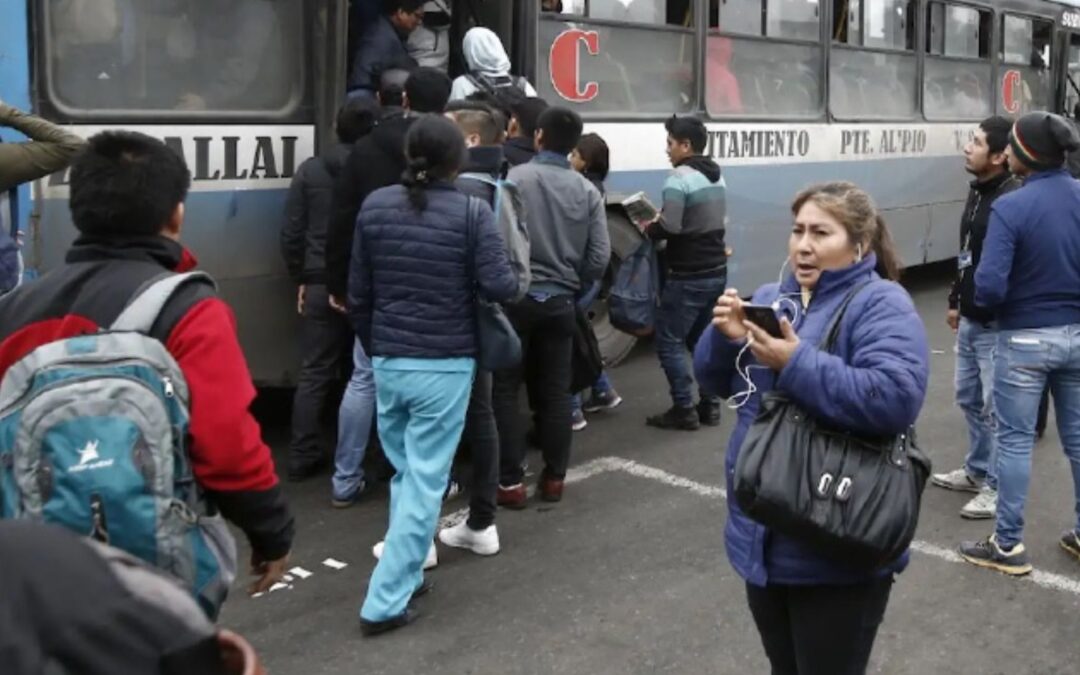
Langues et mobilité urbaine en Amérique latine : séminaire avec Juan Carlos Godenzzi
Le 17 février 2026, le WP6 “Language in its social context” accueille Juan Carlos Godenzzi (Université de Montréal) pour une conférence sur les dynamiques linguistiques dans trois capitales sud-américaines

Lancement d’un séminaire sur les paradigmes en histoire de la linguistique
Le laboratoire d’Histoire des Théories Linguistiques (HTL) lance un nouveau cycle de recherche en collaboration avec le projet inIdEx EFL. Intitulé “Les paradigmes. Histoire et épistémologie”
Prix Science Ouverte 2025 : Qumin récompensé pour la linguistique computationnelle
Le Ministère de l’Enseignement supérieur et de la Recherche a décerné son Prix du logiciel libre de recherche 2025 à Qumin, développé par Sacha Beniamine (ancien doctorant EFL) et Jules Bouton (doctorant EFL).
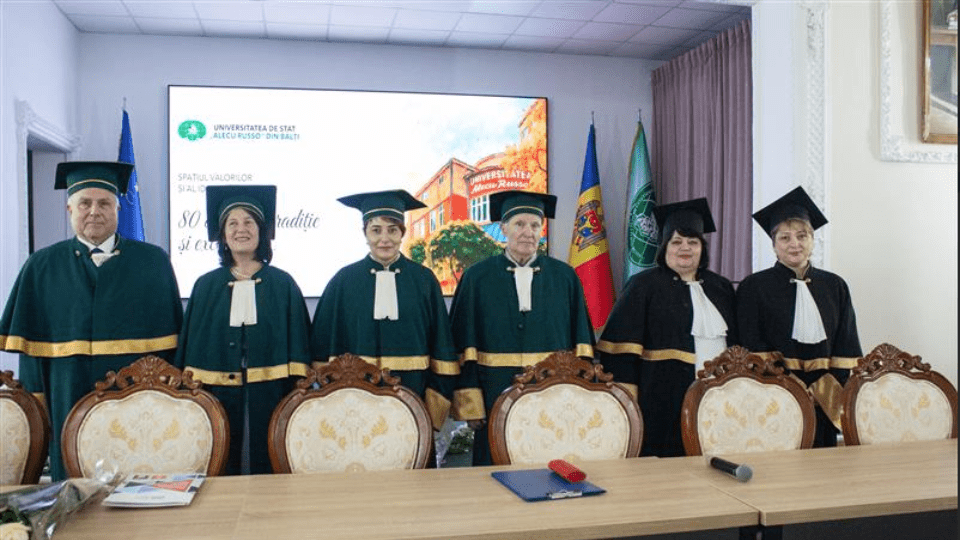
Georgeta Cislaru reçoit le titre de Docteur Honoris Causa de l’Université d’État de Bălți
Le 5 décembre 2025, Georgeta Cislaru, enseignante-chercheuse au laboratoire CLESTHIA (Université Sorbonne Nouvelle) et membre de l’IUF, a été honorée par l’Université d’État « Alecu Russo » de Bălți (USARB) en Moldavie