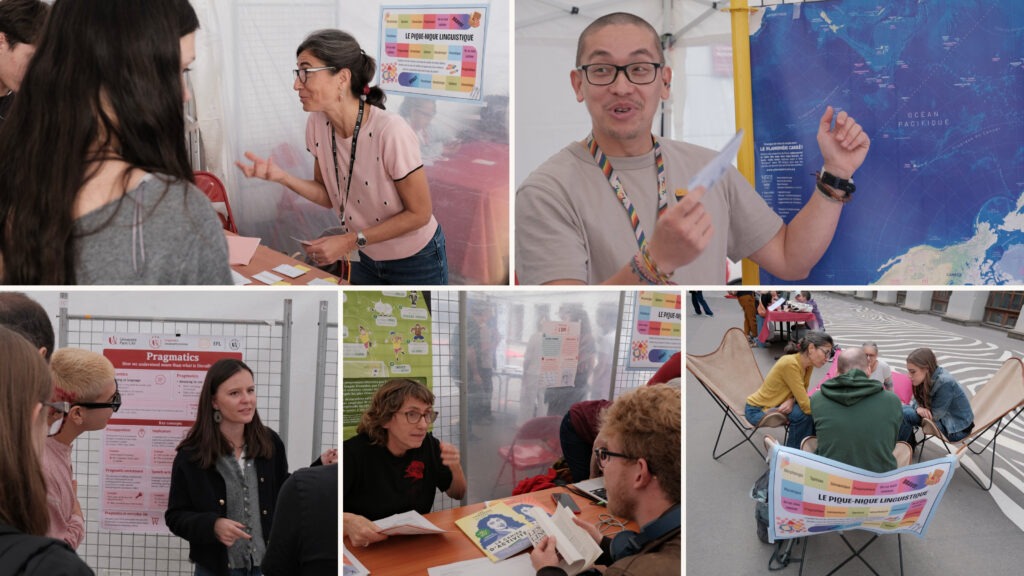
A sound map, a picnic, a quiz and an ultrasound of your tongue: for the Fête de la Science, the EFL project offered seven activities to discover linguistics through play, listening and experimentation.
How does a language work? Why aren’t grammar rules always what we think they are? What happens in our mouth when we pronounce a foreign sound? Once again this year, last october, EFL researchers stepped out of their labs to share these questions with the public. Here is what they offered.
1. LinguaMap is live
The Fête de la Science marked the launch of LinguaMap, an interactive map that lets you hear the diversity of languages, accents and voices. Its motto: every language, every accent, every voice tells a story. The map is open to all: 👉 linguamap.lipn.univ-paris13.fr
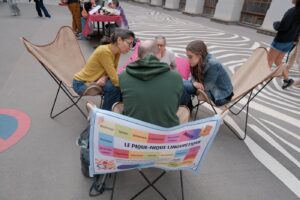
2. The linguistic picnic
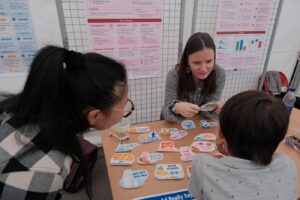
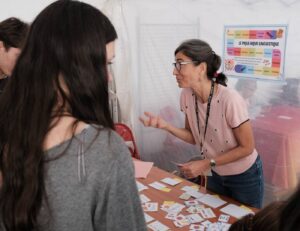
Games about sounds, words and expressions, offering an easy way into linguistics and a glimpse of the remarkable diversity of the world’s languages.
3. Playful grammar
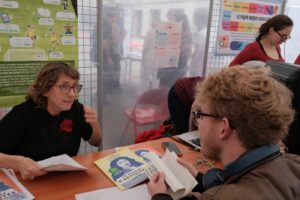
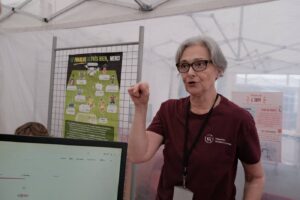
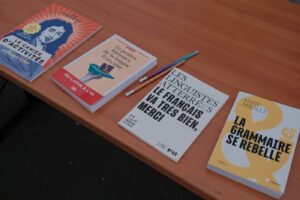
Led by linguist Anne Abeillé, this workshop invited visitors to test themselves on French. A frequent surprise: the rules we actually follow are not always the ones we were taught. A good illustration of what empirical linguistics does: observe language as it is really used.
4. Bilinguals’ languages quiz
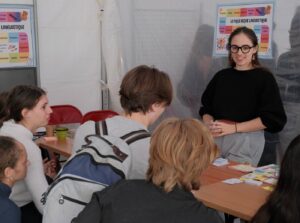
Listen, then guess the language. Designed with the association Bilingues et +, this quiz highlighted the richness of multilingual families.
5. Persuasion between the lines
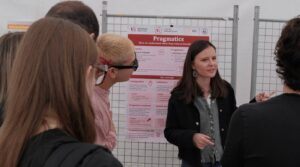
What is a food advertisement really telling us? This pragmatics workshop (pragmatics being the branch of linguistics that studies meaning in context) unpacked the implicit messages hidden behind slogans.
6. Languages of the world – Visions and Perspectives
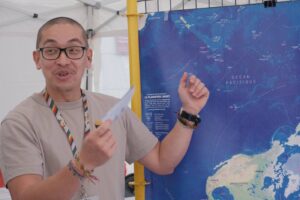
With the square world map created by the association Nuées, visitors discovered country names in their original scripts and pronunciation: a journey through the world’s writing systems… and a chance to learn how to say hello in 150 languages.
7. Language in action!
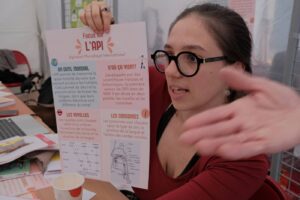
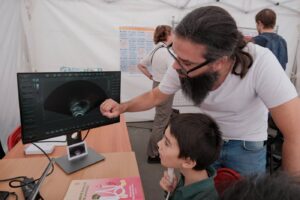
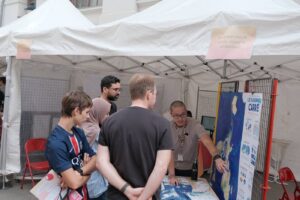
Ultrasound isn’t just for medicine. Linguists use it to observe tongue movements during speech and better understand pronunciation, including in foreign languages. Each participant left with an ultrasound image of their own tongue as a souvenir.
Many thanks to everyone who came to play, listen and ask questions, and to the teams and partner associations who made these events possible. See you next year, and in the meantime, on LinguaMap!